Grief is heavy. Sorting out a house or land can feel even harder. This guide explains what happens to real property during the Florida probate process, from filing in probate court to asset distribution to heirs or a sale when needed.
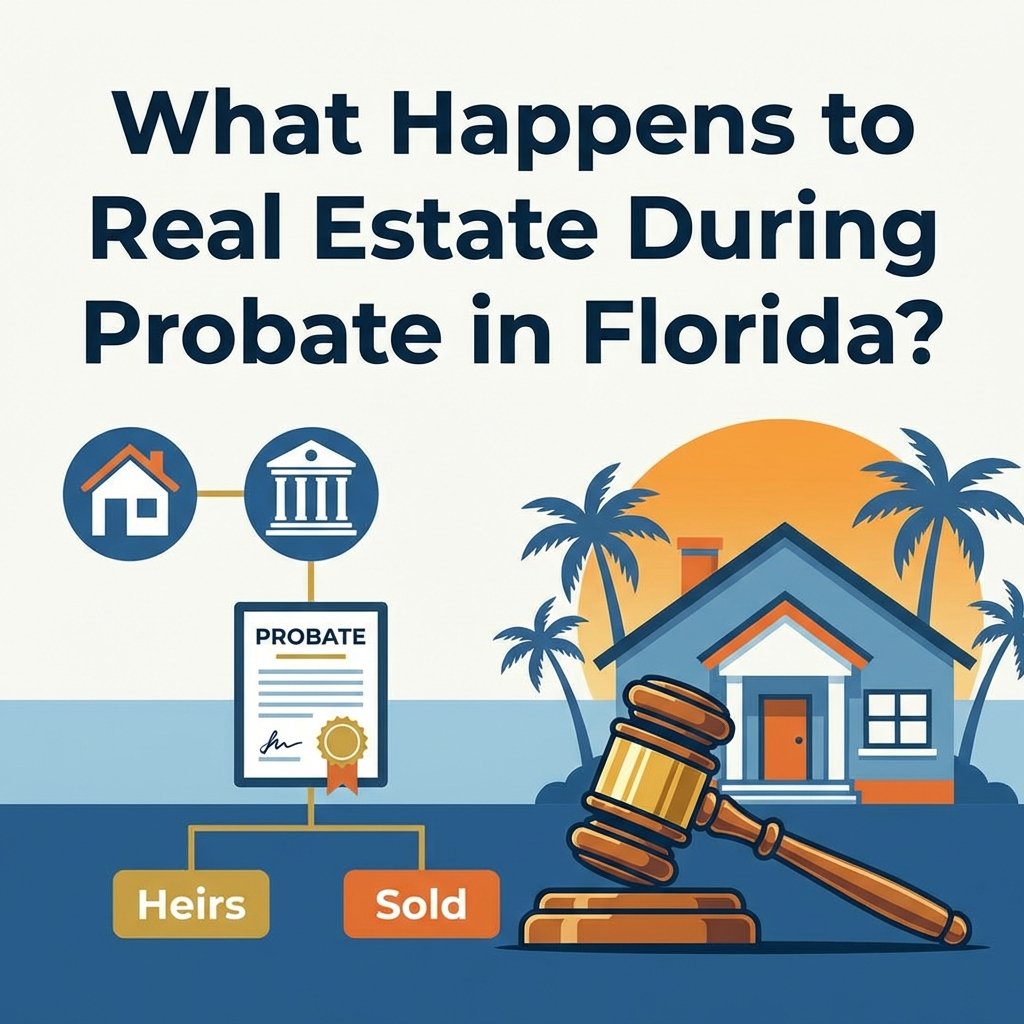
Families in Pembroke Pines, Fort Lauderdale, and Miami often ask the same question: What happens to real estate during probate in Florida? Here's what actually occurs, and why each step matters for peace of mind.
What is Florida Probate and How Does It Work?
When someone passes away in Florida owning real estate solely in their name, that property typically must go through probate, a court-supervised process to transfer ownership to heirs or beneficiaries. During probate, the court validates the will (if one exists), appoints a personal representative (executor), settles debts and taxes, and then authorizes the transfer or sale of the property.
Probate in Florida is a court process that identifies, manages, and transfers a deceased person's assets. Real property, like a home or land, usually becomes part of the probate estate unless it has a survivorship clause or a named beneficiary. The judge appoints a personal representative, sometimes called an executor, to run the estate.
The personal representative gathers assets, pays valid bills, and keeps property safe. That includes taxes, insurance, repairs, and legal fees. If a will exists, it guides who gets what. If no will exists, intestate succession applies, which is Florida's default inheritance plan.
Does All Real Estate Go Through Probate?
Not every property in Florida must go through probate. Real estate avoids probate if:
- It's jointly owned with rights of survivorship (e.g., by a married couple)
- It's held in a revocable living trust
- There's a "Lady Bird" (enhanced life estate) deed or a Transfer-on-Death (TOD) deed
- There's a named beneficiary (rare for real estate)
If none of these apply, probate is required. Always check the deed and consult a Florida probate attorney for confirmation.
Probate Assets vs. Non-Probate Assets
Probate assets must pass through the court process before transfer. These include items titled only in the decedent's name, like a home owned by one person with no survivorship rights and no beneficiary. For example, if a Fort Lauderdale owner dies and the house is not jointly owned or placed in a trust, it goes into the probate estate.
Non-probate assets transfer directly to named people. They avoid the court process. Common examples include jointly owned homes with right of survivorship, life insurance with named beneficiaries, and bank accounts marked payable on death.
Types of Probate Processes in Florida
Florida offers two main probate tracks. The choice depends on estate value, asset types, and whether a valid will exists.
Formal Administration
Formal administration is the standard, court-supervised probate. It starts with a petition filed in the county where the person lived. A judge appoints the personal representative, who then controls estate assets, including real estate in Pembroke Pines, Fort Lauderdale, and Miami.
The personal representative lists each asset, secures property, and handles taxes and insurance. Formal administration usually takes 6-9 months, but can be longer for complex estates or if disputes arise.
Formal administration closes only after debts are paid and property transfers finish. Once debts are settled and directions are followed, the court authorizes distributions. Heirs receive property or proceeds based on the will or Florida law.
Summary Administration
Summary administration is faster and often less expensive. It fits estates under $75,000, not counting exempt property, or if the person has been deceased for more than two years. The court requires fewer filings and fewer hearings.
A personal representative is usually not appointed, unless the court requires it. For many families in South Florida, this path reduces costs and shortens the timeline for asset distribution.
Step-by-Step: What Happens to Real Estate in Florida Probate
1. Opening the Probate Case
An interested party (often a family member) files a petition with the local probate court. The court appoints a personal representative (executor) to manage the estate.
2. Inventory and Appraisal
The personal representative lists all estate assets, including real estate. The property is appraised to determine its fair market value. The job begins with a full inventory that lists addresses and values.
3. Notifying Creditors and Paying Debts
Creditors are notified and have 90 days to file claims. Debts, taxes, and mortgages must be paid from the estate before heirs receive the property or proceeds. Mortgage payments must continue during probate to prevent foreclosure.
4. Property Management During Probate
The personal representative takes responsibility for estate real property. This means:
- Paying property taxes and insurance on time
- Handling repairs and keeping utilities on when needed
- Maintaining the property to protect value
- Making mortgage payments to avoid foreclosure risks
- Keeping proper homeowners insurance in force
- Checking vacant homes often to reduce risks from storms or theft
5. Deciding the Property's Fate
Transfer to Heirs
If heirs wish to keep the property, the court will transfer the title to them after debts are settled. New owners can live in, rent, or sell the property.
Sale of Property
The personal representative may sell the property, sometimes requiring court approval. Sale proceeds are used to pay debts and expenses; remaining funds go to heirs. A sale may be necessary if there aren't enough liquid assets to cover debts.
6. Final Distribution and Closing
After debts are paid and the court approves, the property (or sale proceeds) is distributed to the rightful heirs. The probate case is closed.
Selling Real Estate During Probate
Probate affects how and when a Florida property can be sold. Court oversight shapes pricing, marketing, and closing. Beneficiaries and buyers should expect extra steps at each stage.
Important Note: Only the personal representative has the authority to manage and sell estate real estate during formal probate proceedings. Heirs cannot directly sell the property, even if they are named beneficiaries. In summary administration cases, beneficiaries may act after receiving proper court authorization.
How to Get Court Approval to Sell Probate Property
Selling real estate during probate requires a judge's approval. The court makes sure the price is fair and that beneficiaries are treated fairly. Here are the common steps:
- The personal representative files a petition asking for permission to sell the property
- The petition identifies the address, explains why a sale is needed, and lists the heirs
- Notice goes to interested parties so they can voice concerns or support
- The court may require an appraisal to confirm market value
- The judge reviews the petition, the appraisal, and any objections, then issues an order
If the will permits sales, the process may move faster, but the judge still confirms the sale.
Why Hire a Specialized Real Estate Agent for Probate Sales
Agents who focus on probate know the court process and the paperwork. They prepare listings that meet court expectations and help the personal representative avoid mistakes. These agents also handle family meetings with care and calm, which reduces conflict.
Experienced agents provide pricing support through market studies and appraisals. Good marketing reaches buyers who understand probate timelines. For personal representatives, support from a skilled agent lowers stress and helps the case move forward.
The Probate Sale Closing Process
Closing a probate sale involves extra review. The court watches each step to protect everyone's rights:
- The personal representative secures court approval to sell, following Florida requirements
- An independent appraisal confirms fair market value to avoid disputes
- A probate-savvy agent lists the home and guides showings and offers
- Offers are reviewed and accepted only after a court order authorizes the sale
- Debts like mortgages, taxes, and creditor claims are paid from sale proceeds
- A title company prepares documents and coordinates closing after court approval
- Beneficiaries receive updates at key points so their interests stay protected
Scheduling and court review can add months, not weeks, to the timeline. After closing, proof of the sale is filed with the court records for the county.
Inheriting Real Estate Through Probate
Inheritance can involve special rules for family homes and debt. Knowing how Florida treats a homestead and mortgages helps families plan the next move.
Florida Homestead Property Rules in Probate
Florida's homestead rules offer unique protections for a decedent's primary residence, sometimes shielding it from certain creditors and affecting how it's transferred to heirs. If the property was the decedent's main home, certain family members gain strong rights.
A surviving spouse usually receives a life estate, which is the right to live there for life, or can choose a one-half interest. Minor children have protection too; they cannot be cut out by a will.
Important Clarification: While homestead property is protected from most creditors, it typically still needs to go through at least a simplified probate process (such as summary administration) to properly transfer title to heirs. The homestead exemption protects the property from creditor claims, but doesn't eliminate the need for court involvement in the transfer process.
These rules may slow transfers, but they protect family housing after a loss. The Florida Constitution, Article X, Section 4, sets many of these protections.
Handling Mortgaged Properties During Probate
Mortgages add pressure during probate. Lenders still expect payment. Missing payments can lead to penalties or foreclosure. A careful plan protects value:
- The personal representative keeps mortgage payments current each month
- If payments stop, lenders send notices that can lead to foreclosure
- Estate funds should be used for payments to avoid late fees
- Property taxes and insurance must be paid to prevent liens or coverage gaps
- If estate cash is short, other assets may need to be sold
- Selling the home can pay off the loan, subject to court approval
- Early contact with the lender helps - ask for time while probate proceeds
Time matters with a mortgaged home. Quick action protects both family and legacy across Broward and Miami-Dade.
Avoiding Probate for Real Estate in Florida
Some owners choose to keep real property out of probate. Planning ahead can reduce cost, keep privacy, and shorten the wait for heirs.
Joint Ownership with Right of Survivorship
Joint ownership with right of survivorship lets the surviving owner take full title upon death of the other owner. Florida treats this as a direct transfer. The court does not control the handoff. The survivor presents the death certificate and records new documents to update title.
Without a clear survivorship clause or a named beneficiary, property often goes through probate. Adding survivorship is a simple move that can prevent delays, reduce court costs, and lower the risk of conflict in Pembroke Pines, Fort Lauderdale, and Miami.
Revocable Living Trusts
A revocable living trust is a legal tool that holds property during life, yet the owner stays in control. After death, the trust document directs who receives the property. Property in the trust does not pass through probate. The result is a faster and more private transfer to beneficiaries.
Trust administration usually takes less time than probate and costs less. Clear instructions in the trust reduce confusion and help families follow the owner's wishes. Many South Florida residents use trusts to keep real estate transfers smooth.
Transfer-on-Death (TOD) Deeds
Transfer-on-death, or TOD, deeds let an owner name a beneficiary for real property. After the owner dies, the property goes straight to the named person. The probate court is not involved in the transfer. The new owner then records proof and takes title.
Important Note: As of July 2025, Florida now recognizes TOD deeds for real estate - this is a recent development in Florida law. A TOD deed must be signed correctly and recorded before death, or it will not be valid. Beneficiaries have no rights while the owner is alive.
Because this is a new legal tool in Florida, not all practitioners may be familiar with the requirements and procedures. Proper drafting and filing are essential, and up-to-date legal advice is critical when considering this option.
Lady Bird (Enhanced Life Estate) Deeds
Florida recognizes enhanced life estate deeds, commonly called "Lady Bird" deeds. These allow the property owner to retain full control during their lifetime while automatically transferring the property to named beneficiaries upon death, avoiding probate entirely.
Common Challenges in Probate Real Estate Cases
Probate real estate often comes with delays and disagreements. Emotions run strong. Clear steps and steady updates can protect both property value and family ties.
Resolving Disputes Among Heirs
Transparency helps. The personal representative should share updates about decisions, maintenance, and any planned sale. Simple explanations calm concerns about asset distribution, especially when heirs live in different cities.
When conflict grows, move quickly. Many families use mediation, which is a guided meeting with a neutral professional. A mediator helps the group reach common ground. If the dispute heads to court, a probate attorney gives each side a fair chance to be heard under the law.
Property Maintenance During Probate
Good maintenance protects value and meets legal duties. Here is a practical checklist:
- Prepare a full inventory, with addresses and estimated values for each property
- Pay taxes, insurance, and association fees on time to avoid penalties
- Complete needed repairs and basic upkeep, like lawn care and roof fixes
- Keep utilities active until transfer or sale to prevent damage
- Make mortgage payments on time to avoid foreclosure risks
- Order a professional valuation if the court or a buyer needs one
- Communicate with beneficiaries, lenders, HOAs, and potential buyers regularly
- Check vacant homes often to reduce risks from storms or theft
- Keep proper homeowners insurance in force during the probate case
Do You Need a Probate Attorney for Real Estate?
Probate rules can be detailed, especially with real estate. Local forms and timelines vary across counties. A probate attorney keeps filings accurate, meets deadlines, and protects title. Legal help is also useful if:
- The will is unclear
- A sale is needed to pay debts
- Heirs disagree about the property
- The estate involves homestead property
- There are mortgage complications
Many formal administration cases require a lawyer because the steps are technical. Families in Pembroke Pines, Fort Lauderdale, and Miami often feel relief with a steady guide. An attorney helps avoid mistakes that can delay closing or reduce value.
Expert Examples and Real-World Scenarios
Example 1: Maria passes away, leaving her Florida home in her name only. Her children want to sell the home. The court appoints her daughter as personal representative. The house is appraised, creditors are notified, and the mortgage is kept current. After debts are paid, the court approves the sale. The proceeds are split between the children.
Example 2: John dies, leaving his house to his wife as a joint owner with right of survivorship. The house passes directly to her, skipping probate entirely.
Example 3: Sarah created a revocable living trust and transferred her Pembroke Pines home into the trust before her death. Her children receive the property directly through the trust, avoiding probate court entirely.
Key Takeaways
- Most real estate owned solely by the decedent must go through probate in Florida
- The process involves court filings, appointing a personal representative, paying debts, and then transferring or selling the property
- Formal probate usually takes 6-9 months, but can be longer for complex estates
- Special deeds, trusts, or joint ownership can help avoid probate
- Florida's homestead laws can add complexity – expert legal advice is essential
- Property maintenance during probate protects value and meets legal requirements
- Court approval is typically required before selling probate real estate
Understanding the probate process for real estate gives families a plan. With experienced counsel, like Carol L. Grant, South Florida families can handle probate court, preserve estate value, and respect final wishes. Planning ahead with tools like trusts or survivorship deeds can also make the next transfer easier for loved ones.
Frequently Asked Questions
Can real estate be sold before probate is finished?
Yes, but the sale typically requires court approval, and proceeds are held until all debts and claims are resolved. The personal representative must petition the court and demonstrate that the sale is necessary and fair.
How long does probate take in Florida?
Formal probate usually takes 6-9 months, but can be longer for complex estates or if disputes arise. Summary administration is typically faster, often completed in 2-4 months.
What if the property has a mortgage?
Mortgage payments must continue during probate. The lender may foreclose if payments lapse. The personal representative should contact the lender early to explain the situation and ensure payments remain current.
Can you avoid probate for real estate in Florida?
Yes, with proper planning – using trusts, joint ownership with right of survivorship, Transfer-on-Death deeds, or Lady Bird deeds can bypass probate entirely.
What's the role of the personal representative?
They manage the estate, pay debts, maintain property, and handle sales or transfers under court supervision. They have a fiduciary duty to act in the best interests of the estate and beneficiaries.
What happens to a house in Florida when the owner dies and probate starts?
When someone dies owning Florida real estate, the property usually enters probate court. The court checks whether a valid will exists, then follows it or Florida law to decide who receives the home.
Can heirs sell real estate during probate in Florida?
Only the personal representative (not the heirs directly) can manage and sell real estate during probate in formal administration cases. The personal representative typically needs court approval before proceeding with a sale.
In summary administration cases, beneficiaries may be able to act after receiving the appropriate court order, but the court still oversees the process. This protects buyers and heirs and ensures that debts and claims are handled before money is distributed.
How long does it take for real estate to pass through probate in Florida?
Time varies based on estate complexity. Many estates take several months, while complex cases or disputes can take a year or longer. Summary administration is typically faster than formal administration.
Are there ways to avoid having real estate go through probate in Florida?
Yes. Living trusts, joint ownership with survivorship rights, and Lady Bird deeds can keep property out of probate and shorten the wait for beneficiaries. Transfer-on-Death deeds are now also available in Florida as of July 2025, though this is a recent legal development that requires up-to-date legal guidance to implement properly.
This article provides general information only, not legal advice. For advice on your specific situation, speak with a licensed Florida attorney. Carol L. Grant serves families in Pembroke Pines, Fort Lauderdale, Miami, and surrounding South Florida areas with probate, estate planning, and elder law matters.